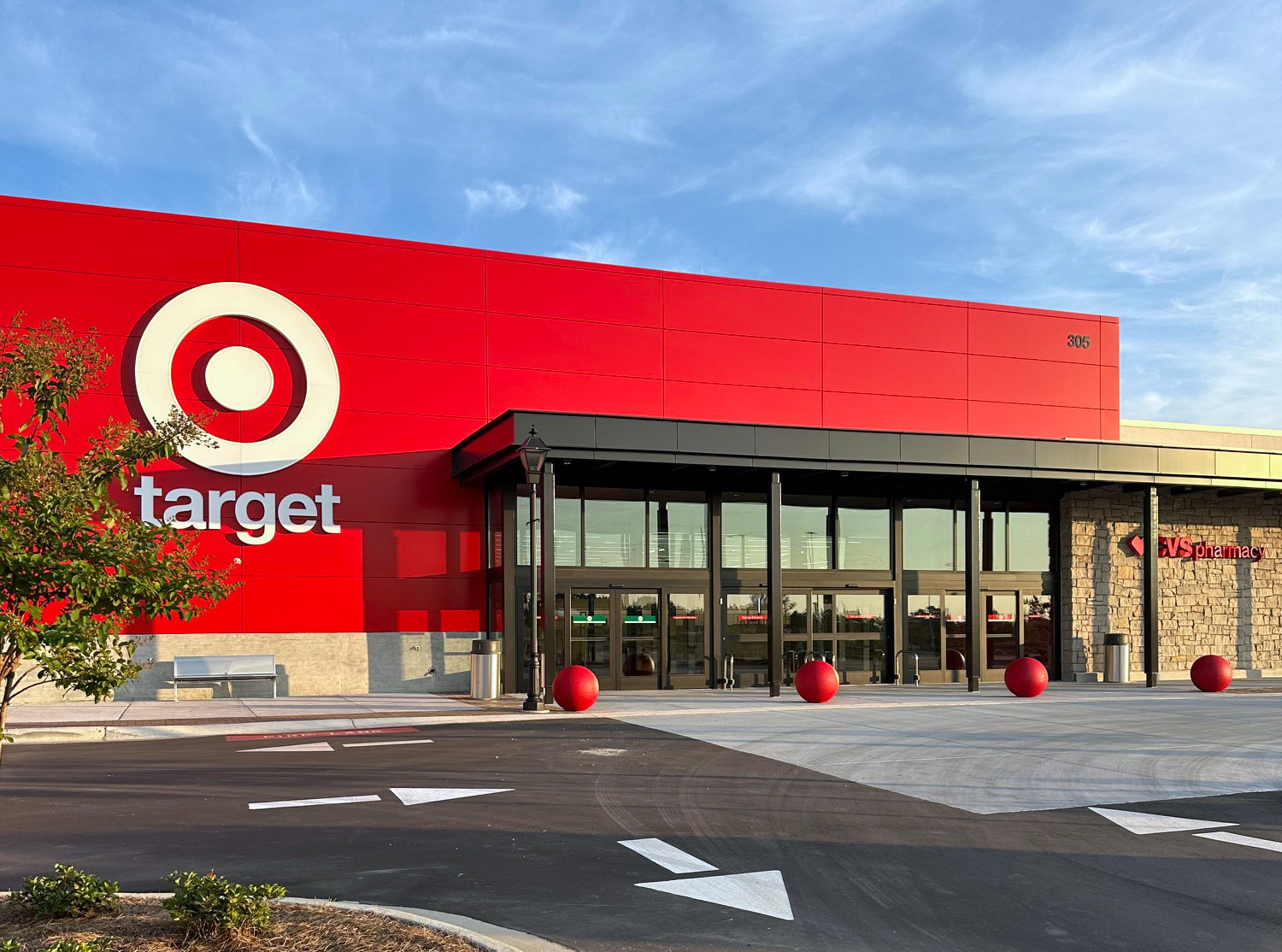
Target, Dollar General, and Ross Stores

3
Target would be classified as being in retailing in the consumer discretionary then multiline retail since they offer a wide range of products. Then ultimately being General merchandise stores. Ross Stores would be classified as Specialty retail and under Retail Apparel. Lastly, Dollar General would be under General Merchandise similar to Target!
3/40
Industry (SP500) Market Cap Trend

4
Let’s show the market cap trend for the SP500 companies in retailing and Consumer Durables & Apparel. We can gather that retailing has a clear advantage with every section, but does see slight dips in 2022 for Total Net Income and Total Market Capitalization.
4/40
Industrial Trend - Choose Your Own KPIs (Industry Median) - (Target/ Dollar General/Ross Stores)

5
As the professor listed before we can gather from this graph the P/E median being 20 for both retails. With Food & Staples Retailing seeing spikes in 2020 and a slight drop in 2021, but then sees another improvement in 2022.
5/40
Largest Retailers by Market Cap 2022, US SP500 - (Dollar General/Ross Stores/Target)

6
The biggest companies that I have interest in have solid market cap such as Ross Stores, Dollar General, and Target.
6/40
Individual Stock Analysis

8
The companies I've selected Target, Dollar General, and Ross Stores. We can the correlations between each company, and there being mixed superiority between each company with mostly Target showing their efficiency. It'll be a great project to analyze each of these companies.
8/40
Dollar General 2022 Slip

15
I decided to use AutoZone as a benchmark. As for Dollar General profitability we can see there's stable growth, but there's points that signal DG being less efficient compared to a company such as AutoZone. It's evident since for Net Margin we can see DG and AutoZone remaining steady. Whereas DG floats at a consistent 6-7% in comparison to AutoZone which is at between 12 - 15%. For ROA, this where AutoZone is performing much better than DG. In 2022 being at .16. It's quite telling for DG seeing the immense growth in revenue and net income, but less efficient to what is supposed to a smaller company like AutoZone. Their underperformance is quite concerning to any investor looking to invest with factors such as efficiency falling behind.
15/40
Dollar General's - Financial Health in Short & Long Terms

17
Can Dollar General see a rebound? Looking into ratios which DG has strong metrics for specifically Current ratio which means they have stable short-term liquidity. Throwing AutoZone to compare to in which we can see they remained stable compared to them. As for Liability Asset Ratio we can see the growth starting in 2019 in which they were at 0.51 and rose towards .76 in 2022. Which explains their financial leverage being high as well. Although we were seeing efficiency issues with DG, there is promise for their short-term metrics. Judging from the long-term ratio does reveal the reasoning behind being skeptical when investing since it keeps increasing.
17/40
Dollar General's Operating Efficiency

18
Dollar General's performance for COGS/Total Revenue was stable which reveals why their efficiency hasn't increased. Inventory Days is seeing a slight increase from 83.17 in 2021 to 87.55 in 2022 revealing inefficient supply chain processes for their inventory and capital being tied up. For SG&A Expenses has also remained at a steady 21-22%. Their labor productivity hasn't seen much change, and instead has seen a slight decrease in 2022.
18/40
Revenue Breakdown 2021 for Dollar General

21
As for the revenue breakdown between the two companies we can see there being a decrease for COGS in 2021 sitting at 70.73. Reducing to 68.40 in 2022. Still remaining lower than the industry average. Another key highlight would be the efforts of rising net income from 4.67 to 7.01 in 2022. We can also see a decrease in other costs in 2021 to 2022. Lastly, SG&A expenses has increased and remains to be above the industry average between both years. 2021 being 19.90 and then rising to 22.19 in 2022.
21/40
Target Fundamental Analysis

24
Starting with Net Income, and using Best Buy as a benchmark. We can see Target's impressive growth in net income with the spike in 2022. Current Ratio we can see Target barely hitting above 1.0 assuming that short-term liquidity is solid. Best Buy does have better overall liquidity than Target. Total Revenue shows great recovery from both companies from 2022 and onward. As for Liability Asset Ratio Target does have debt than Best Buy, and in summary we can conclude Best Buy does have more liquidity than Target. As for indications for over-value we can assume from the current ratio in which it barely reaches 1.0 revealing their lack in short-term, and as well as their rising liability asset ratio.
24/40
Dollar General's Financial Health in Short & Long Terms - Target

25
As we can see Target has had a steady ratio barely hitting 1.0, so there's promise for short-term liquidity. Best Buy does have a more promising current ratio though, but nothing too far. Liability Asset Ratio reveals signs of steady growth but not as much as Best Buy (.83) and Target being (.76). Could be something investors seek into when analyzing them for the long-run. They have a strong Long Tern debt ratio, so they're stable in that too. Nothing that shouts out concerns for Target as investors seek to invest, but the only thing to look into would be their Financial Leverage.
25/40
Target - Operating Efficiency

26
Target's COGS/ Total Revenue is constant .70 so there isn't much to gather there besides efficiency. As for Inventory Days it increased from 58 days in 2021 to 67 days in 2022 so that goes to show their lack of inventory turnover (capital tied up). Labor Productivity reveals their majorly behind to a company such as Best Buy. This is something that Target would want to focus on if they wish to be as efficient as a company like Best Buy. SG&A expenses have remained relatively similar throughout the years with a swing, but not as different as Best Buy. Investors could question efficiency for the long-run especially based on Labor Productivity and the actual price.
26/40
Industry Outlook is Bleak (Target)

28
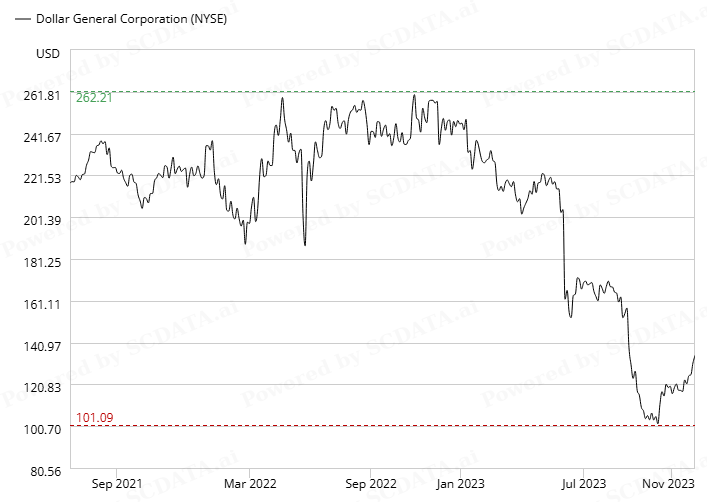
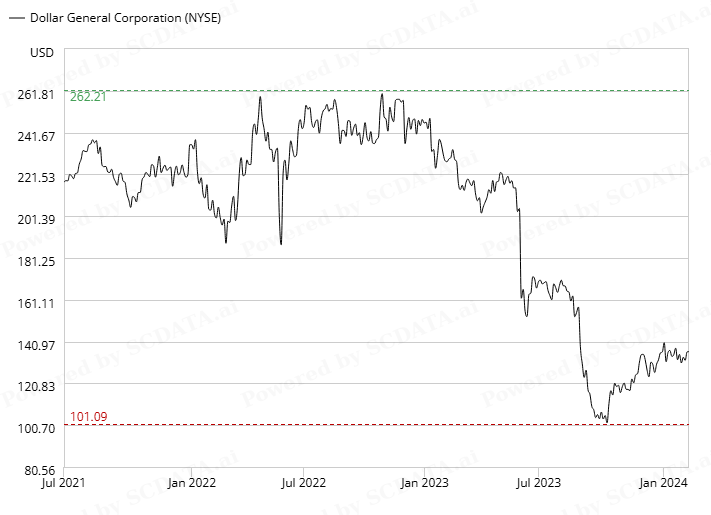
Looking into the industry standards. Target definitely outperforms with their high net income, and clear growth. However the signals such as them being close to the top of price range with the actual price is concerning. Revealing it not being the best optimal option to buy at the moment, and why it's over-valued. Is the growth sustainable in the long-run?
28/40
Revenue Breakdown 2021 for Target

30
Comparing both revenue breakdowns for 2021 and 2022. We can see that SG&A expenses has slightly decreased in 2022 compared to the initial 19.90%. The COGS has remained steady with it being initially. Other than that nothing to major or straight up distinctions that are outliers even comparing to the industry average in the US. Net Income has rose to about 6.55% in 2022 too, and Other Costs was wiped from Target in 2022 as well.
30/40
Ross Stores - Fundamental Analysis

32
With Net Income both companies shortly after COVID shot up and began the recovery process. Though, companies like TJX overperformed competitors like Ross Stores dramatically. Total Revenue reveals Ross Stores lack in revenue, but has shown promise right after 2021 for their recovery. Current Ratio: We can see Ross Stores outperforming in terms of liquidity compared to TJX. Staying above 1.0 threshold compared to other companies like Target that we analyzed before. They do have signs of potential longevity/lower when it comes Liability Asset Ratio as they're consistent in this metric compared to TJX. However still worth mentioning that the weak correlation is quite alarming for investors looking to invest for Ross Stores.
32/40
Financial Health in Short & Long Terms - Ross Stores

33
Starting with Current Ratio: Ross Stores shows consistency staying a solid ratio above 1.0 and performing better than TJX for most years. Revealing their strong financial efficiency. As for Liability Asset Ratio, Ross Stores has a lower ratio compared to TJX, so there's promise for long-term debt. Financial Leverage: Ross Stores lacks compared to TJX, so Ross might want to reevaluate some financial plans they had at the time. Long Term Debt Ratio: Ross Stores stayed lower than TJX throughout the years, so it shows they have financial stability and great planning.
33/40
Ross Stores - Operating Efficiency

34
Ross Stores COGS/Total Revenue: They remained stable/constant throughout the years similar to TJX, so there's nothing alarming upon being consistent. Inventory Days: We see an increase compared from 2021 being 55 days to rising to 60 in 2022. Therefore there's a lack of efficient operations when it comes to turning over inventory/tied up capital. Labor Productivity: Ross Stores we can see outperforms TJX in, and reveals several positive indicators such as being efficient when it comes to labor practices. SG&A Expenses/ Total Revenue: They have a stable low SG&A expense, so there's nothing alarming with this either. Inventory Days is something that should be looked into and adds into the over-valuation.
34/40
Revenue Breakdown 2021 for Ross Stores

37
Comparing both revenue breakdowns for 2021 and 2022. COGS: It did decrease from the initial 78.51% in 2021, and now being even closer to the industry average of 73.43% in 2022. 2022 COGS was 72.47%. Another highlight was the increase in Net Income to 9.11% in 2022 compared to 2021 which initially had a sliver in the breakdown. SG&A Expenses: This decreased from 19.98% (2021) to 15.20% (2022). It seems every metric began coming closer to the industry average a year later for the company which is promising.
37/40
 SCDATA
Update
SCDATA
Update